2026-06-19 - LinHT Rev B Status (Major Update), Mercury Proven Useable as an HF Data Communications Mode, Ham.Live is Going Away; N5SAC, the Sachse Fire Station Ham Radio Club is Trying to Save It
Zero Retries is an independent newsletter promoting technological innovation in and adjacent to Amateur Radio, and Amateur Radio as (literally) a license to experiment with and learn about radio technology. Radios are computers - with antennas! Now in its fifth year of publication, with 3500+ subscribers.
In Zero Retries 0254, I stated that “the plan” was for this issue publish next Friday. But, the three stories about technological innovation in and adjacent to Amateur Radio - LinHT, Mercury, and Ham.Live weren’t amenable to such a schedule.
Before Friedrichshafen, we want to put the current LinHT development status in one place. We have published many short updates over the last months, and the project moved through several phases: Rev A proof-of-concept testing, Rev B design, manufacturing, first boot, RF tests, audio bring-up, GNSS debugging, and now Rev C planning.
This post summarizes that progress. It starts with what Rev A proved, then goes through what we changed in Rev B, how we built the first boards, what worked during testing, what failed, and what we need to fix before Rev C.
If you want the longer background, start with my older text about the first LinHT prototype:LinHT – Open SDR Handheld for Radio Amateurs. That article describes the Rev A board, the Retevis C62 donor-radio approach, and the basic idea behind LinHT: a Linux-based SDR handheld transceiver, open enough that the radio can be changed in software, not only programmed from a vendor tool.
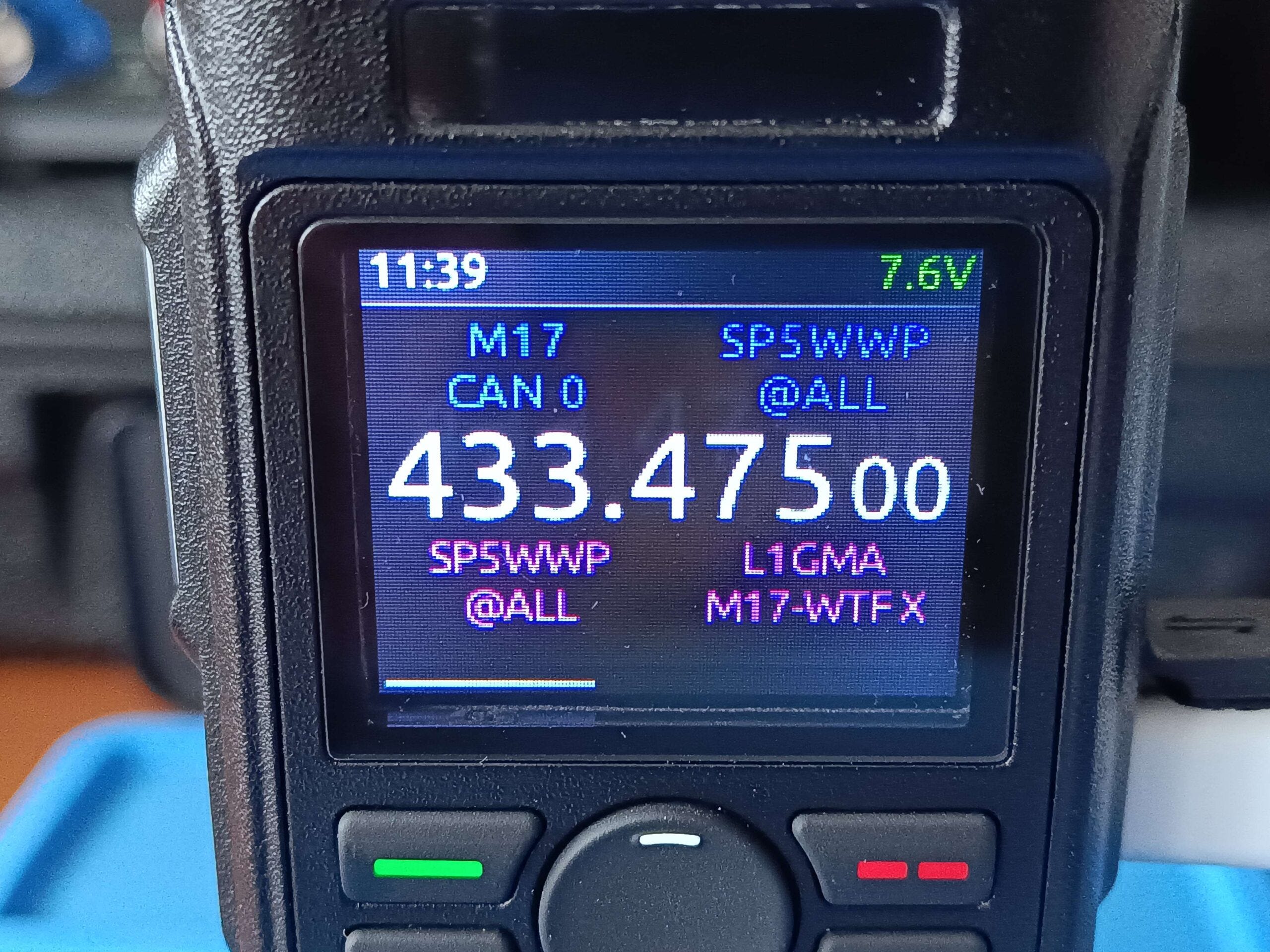
Rev A was our proof of concept. It showed that the architecture made sense and that the device could work the way we imagined. An i.MX93 system-on-module could boot Linux inside a handheld radio body, run a Yocto image, expose USB networking, talk to the display, run GNU Radio flowgraphs, and use the SX1255 IQ RF front end. We decoded M17, tested TETRA receive, displayed spectrum data on the small screen, and ran enough hardware and software tests to be sure that the concept was valid.
Rev B is the revision where we tried to turn that proof of concept into a much more complete handheld.
This is a very comprehensive update on LinHT, probably a ten minute read. Click on the title link for the complete article.
The development progress outlined in this update is remarkable, in my opinion. Just as one example, the completely independent development of LinHT is running rings around all the China-based Amateur Radio manufacturers that are endlessly iterating on mundane “advances” in their products, such as embedded 1200 bps TNCs accessible via Bluetooth. That’s… nice… but hardly competitive in the mid-2020s, and just another copycat feature. LinHT represents a leap forward in (Amateur) radio technology.
Very Talented Developers
In my opinion, the three developers of LinHT:
Andreas Schmidberger OE3ANC
Vlastimil Slintak OK5VAS
Wojciech Kaczmarski SP5WWP
(and the supporting team) are “punching above their weight”, developing a significant new radio project that could easily justify the resources of a company and a team of ten or so developers. (In saying this, I’m not intending to “sabotage” the LinHT project… but offering credit where due…) Each of the three developers are proving their respective talents in radio technology development. Thus any company that is doing radio technology development would be fortunate to employ any of them. A comment by a company that was represented at GNU Radio Conference 2025 that had open positions for radio technology put such demonstrated capabilities into context - “Don’t tell me what skills you have, show me what skills you have on a project that you’ve executed on.” The LinHT developers are doing so.
Rev C May Well Be Buildable by Amateur Radio Operators
What struck me after reading this update is that there don’t seem to be any “unknown unknowns”. The remaining issues, for example - the placement of the GNSS receiver, seem understood. Thus it’s “just” “straightforward” engineering to fix the remaining issues.
Thus a Rev C board could be put into production and sold to brave experimenters to create their own LinHT:
Buy a Retevis C62 radio,
Buy a Rev C LinHT board,
Disassemble the Retevis C62,
Scavenge the required components from the Retevis C62 board (display, etc.)
Add the scavenged components to the LinHT board,
Reassemble the radio with the LinHT board,
Flash the current images onto the components.
Enjoy your bragging rights of having a very rare, very cool, bleeding edge piece of Amateur Radio technology that can do things no other portable Amateur Radio unit can do.
That last bullet is no small thing. We all like to brag about something cool in our personal Amateur Radio sphere. For example, there is a large manufacturer of commercial portable radios that can be very expensive. Amateur Radio owners of such units enjoy bragging about them and showing them off. Admittedly those units are nice. As for me, I would be much more impressed by someone showing off their LinHT. Just as one minor point… a LinHT can run M17, and Single Sideband (SSB). That last one will undoubtedly impress, because even the $$$ commercial portable radio can’t do SSB.
Another example of the much greater capabilities of the LinHT versus typical commercial Amateur Radio portable radios - because LinHT is Open Source, all of the text on the display can be customized for one’s language preference. Instead of defaulting to common languages such as English, the LinHT can display in, for example, German, Czech, or Polish.
A Few Speculations About the LinHT as Disruptive Technology
The market for the LinHT will be larger than the Amateur Radio market. Remember that LinHT runs unmodified GNU Radio v3 flowgraphs. Thus the practical form factor of the LinHT will be attractive to GNU Radio developers who are also Amateur Radio Operators1 for testing and using their experimental GNU Radio flowgraphs.
In looking ahead at the potential future of the LinHT as a commercial product, I’m reminded of PacComm being founded by licensing the TNC-2 design from TAPR. PacComm went on to be a successful company by developing unique products for both the Amateur Radio and commercial markets. Another example is FlexRadio was founded on the basis of a project that was published in a magazine. FlexRadio “came from behind” to provide bleeding edge products such as the Aurora series and currently being unique in the ability to add in FreeDV RADE as “just another mode selection”.
The “not invented here” perspective of all of the Amateur Radio manufacturers, especially the China-based radio manufacturers towards the LinHT to date seems to me to be a classic example of The Innovator’s Dilemma. That is, those radio manufacturers are all doing well, selling derivatives of their current products, into (what they perceive as) a largely static, undemanding market. They are the “Blackberry” versus the LinHT “iPhone”. For example, Icom’s extension of their popular IC-7300 into the IC-7300MK2. FlexRadio is another such example, creating new products only for the (well understood, to them) market for very high end HF transceivers rather, than, for example, developing a new product line for VHF / UHF / Microwave bands.
The Amateur Radio manufacturers can easily justify their deliberate ignorance of the LinHT because there is no “threat” to their “business as usual”. LinHT is “merely a minimally funded project” by three persons. But make no mistake…
the LinHT is disruptive technology within (and beyond) the Amateur Radio market.
There are many instructive parallels of successful companies choosing to ignore alternatives to their dominant products and technologies until a challenger specializing in those alternatives becomes a threat to their business. By time the threat to their business is apparent, it’s often too late and the inertia of the larger, successful company works against them.
Some person, some company, or perhaps some non-commercial organization is going to figure out the large and lucrative market waiting for a LinHT (and, I’m convinced, the development of a LinMobile).
When a technology like LinHT has unlimited potential to scale upward and fix the many problems existing in the current Amateur Radio paradigm… you know it’s just a matter of time. That’s the exciting thing about the development of a radical new technology like LinHT challenging the current paradigm of fixed function radios by current Amateur Radio manufacturers. It’s fun watching for “the breakout”.
Many of us have seen such disruptive technology ascend into dominance. Examples abound:
OFDM versus earlier forms of dense modulations,
iPhone versus the then-dominant Blackberry,
Linux versus Windows,
Personal computers versus minicomputers
The Internet versus the telephone network.
We’ve seen these disruptive technologies “come from behind”, thus we know how such stories eventually play out when the disruptive technology (LinHT in this case) offers compelling advantages over the currently dominant technology.
The technological capabilities of a fully software defined radio, in a portable (and eventually, mobile) form factor, are just too profound for it not to become the dominant paradigm in radio technology. It might take time… it will probably come (at scale) from a source no one would have expected… but it is inevitable.
I… cannot… wait! Goodspeed LinHT team! And Thank You for taking this big leap and incredible amounts of work to move Amateur Radio forward beyond the “same old, same old” technology that the Amateur Radio manufacturers would prefer to offer us.
Mercury Proven Useable as an HF Data Communications Mode
By Steve Stroh N8GNJ
Mercury is an Open Source project by Rhizomatica to create a high performance data communications mode for use on the High Frequency (HF) bands below 30 MHz. The HF bands pose unique challenges for data communications including fading, significant potential for interference, and many other conditions that necessitate data communications modems (and digital voice modes) to be uniquely adapted for HF.
The primary differentiation between VARA HF (currently the highest performance HF data mode running as software on a host computer via an audio interface) and Mercury is that Mercury is Open Source, free to use, and can be used on computer systems other than Windows. In contrast, VARA HF is proprietary, requires the payment of a license fee to “unlock” full performance, and runs only on Windows or Windows workalikes such as WINE.
Similar to VARA HF (which Mercury was modeled2 on):
Mercury is software on a host computer via an audio interface,
Mercury uses Orthogonal Frequency Division Multiplexing (OFDM) modulation,
Mercury implements Forward Error Correction,
Mercury implements dynamic “upshift” and “downshift” amongst its variable parameters to attempt to maintain a continuous data communications connection for the length of the data transfer.
In some mentions of Amateur Radio media, Mercury is stated as being “compatible” with VARA HF. Yes, and No.
Yes, Mercury implements the same software (TCP Sockets) interfaces as VARA HF. This enables Mercury to be used in the same way as VARA HF is used with applications software such as the Pat Winlink client, and (at least experimentally) the powerful VarAC application that incorporates text chat, bulletins, file transfers, and email.
No, Mercury is not interoperable with VARA HF over the air. A VARA station cannot communicate with a Mercury station.
At the moment, this incompatibility reduces the immediate utility of Mercury because it cannot be used to communicate with the large number of Winlink Gateway Stations (Radio Message Servers) that use VARA HF.
But there are many other uses of data communications over HF that Mercury is well suited for, including the increasing popularity of Automatic Packet Reporting System (APRS) beacons over HF, short messages or emails peer to peer (such as using Pat in peer to peer mode, rather than connecting to Winlink). Given that Mercury is free to use, I think it’s probably a matter of time, with some improvement in performance, that Winlink Gateway Stations (Radio Message Servers) will add Mercury in addition to VARA HF.
KM6LYW Demonstrates Mercury
I think that Mercury is ultimately more useful than VARA HF for the simple expedient that it can be run natively on a Linux system as minimal as a Raspberry Pi, as demonstrated by Craig Lamparter KM6LYW on the KM6LYW Radio YouTube Channel:
Better Than VARA: First Winlink Email Sent over MERCURY on RF! (DEMO)
The guys at Rhizomatica just made a better VARA than VARA. Unlike VARA, it’s free, open-source, runs on Linux and Raspberry Pi. While not directly compatible with the proprietary VARA encoding, it does use the same API so existing VARA-HF clients (Pat, Winlink Express) can immediately leverage this exiting new HF radio transport!
The radio on the right (ic705) is the client running pat client (pat http), and the radio on the left (ic7300) is running pat server (pat --listen=vara http).
This is a first-ever technology demonstration and proof-of-life. Much more is to come, in fact, I think I’ll create a MERCURY Winlink Server that everyone can run along side VARA, Packet, ARDOP, etc.
Both VARA and MERCURY leverage “Orthogonal Frequency Division Multiplexing” which is the foundation for modern/commercial RF transports, including WIFI. That’s how we get our speed and reliability. MERCURY includes “gear shifting” dynamically adapting to conditions and fading SNR.
Kudos to KM6LYW for doing this demonstration of Mercury, that it is viable.
I hope that KM6LYW will eventually incorporate Mercury into DigiPi equivalent to ARDOP being included as a mode in DigiPi.
I have hopes that Mercury will be incorporated as a “standard mode” into Open Source Software Defined HF radios such as the HF Signals sBitx and zBitx (I have suggested this to HF Signals). I hope that the Mercury developers will reach out to FlexRadio to make Mercury available as “just another mode selection” on the FlexRadio 8000 series and Aurora, as is now the case with FreeDV RADE.
Ham.Live is Going Away; N5SAC, the Sachse Fire Station Ham Radio Club is Trying to Save It
Email from Lonnie Webb KG5WHQ:
The beloved Net logging and chat service is going away. I love Ham.Live as it is SO easy to use that even your Uncle Fred can work the chat from the VA! N5SAC - the Sachse Fire Station Ham Radio Club decided Ham.Live is too valuable to lose. We have built a private instance to test it prior to it being shut down.
Our goal is to continue Ham.Live (probably under a different domain name) as a hosted service for anyone to use without the complexity of creating their own hosted version of Ham.Live.
N5SAC (www.sachseraces.org) is a ham club, we aren’t going away. But we do badly need publicity and beta testers. We aren’t asking for sponsors, but we wouldn’t turn one down. Our club is open to the public and have FD members in our club.
The push is to be golden for July 1, when the original Ham.Live service will go offline.
I hope you can help us bring more publicity to our project with clubs around the world.
Here’s the text of the Facebook post for those (like me) who sometimes cannot access individual Facebook posts:
Ham.Live goes away at the end of the month, and I will be sad to see it go. BUT--KK6BEB did such splendid work that we at N5SAC, the Sachse, TX Fire Station Ham Club, have given it a new home!
Be a beta tester and help us iron out the bugs! Visit https://tinyurl.com/n5sac-chat to learn more. Share out the URL and QR code to your ham club.
We ask you to give up an email address so we can notify you when we go out of beta. Your data should persist unless we find a terrible bug.
This is an instant text chat and logging software for YOUR ham radio nets. You can share links to files, images, etc. It’s faster, and no actual training is needed to use it. Your Uncle Fred--who cannot operate Discord--can even use it without coaching.
Log in and set up a new net in about 5 minutes. This is EASY. It even works on HF nets
The best feature: you can “whisper” privately to anyone on the net in a side-chat!
N5SAC says, “Be a ham and have fun!”
Context on Ham.Live
Image courtesy of Ham.Live
From the main page:
Ham.Live is now open source
Every club can run its own instance — free, MIT-licensed, and fully documented. View & self-host →
Self-hostable web app for running amateur radio nets.
Ham.Live is a browser-first application that helps amateur radio operators discover, join, and run nets — coordinated on-air meetups where stations check in, exchange signal reports, and follow a moderated agenda. This is the community open-source edition, intended to let clubs and groups run their own instance.
This repository is the MIT-licensed sister project to the original hosted Ham.Live service, shared for the amateur radio community to run and carry forward.
Project status
Ham.Live is released as-is for the community to self-host and carry forward. It’s the code that powered the hosted Ham.Live service, which is winding down — I’m stepping back from day-to-day operation, not taking on a support desk.
What that means:
No guaranteed support, SLAs, or maintenance. Running an instance is do-it-yourself.
Issues and pull requests are welcome but handled on a best-effort, time-permitting basis — they may not be answered or merged, so please don’t expect a quick response.
Forks are encouraged. If someone wants to drive this forward as a community maintainer, that’s the goal — not a worst case.
The MIT license already says it: provided without warranty. The same applies to support.
If your club depends on it, treat it like infrastructure you own: read the docs, keep your own backups, and plan for self-reliance.
Features
Real-time net participation — live presence, ordered station lists, and interactions (hand, highlight, check-in/out, signal reports)
Net control (NCS) tools — start/stop nets, assign roles, and run moderation via shell-style commands
Net discovery & following — find active nets and follow the ones you care about
Real-time chat (optional, via GetStream) with inline images
Email + Google sign-in — magic-link email login, with optional Google OAuth
No front-end framework — native ES modules, Custom Elements, and reactive stores
I confess I was not aware of Ham.Live until KG5WHQ’s email.
Assistive applications like Ham.Live make trying to keep track of fast-paced nets, especially to those that are new to the experience, a bit easier and less intimidating.
I hope that some Zero Retries readers can assist the Sachse Fire Station Ham Radio Club in creating a new hosted version of Ham.Live for the benefit of those who prefer not to, or or cannot, host their own version of Ham.Live.
Another Assistive App for Running Nets - KK7NQN Transcription Service Node (TSN)
Another assistive application for running a net is the KK7NQN Transcription Service Node (TSN):
As the name indicates, KK7NQN TSN attempts to transcribe the conversation on the net (and much more), especially the callsigns that can come fast at a net control operator during a busy net. KK7NQN TSN uses some web services, but the core functionality isn’t dependent on web services. KK7NQN TSN can be run on hardware as modest as a Raspberry Pi, including the AI features.
For long time Zero Retries readers who are already aware of KK7NQN TSN (which was publicly debuted at the Zero Retries Digital Conference 2025 - video link), a new look at the kk7nqn.net website is warranted. KK7NQN has put a lot of work into better explaining the TSN concept and how it’s used.
Whether you’re a grantee, volunteer, 44Net user, member of the amateur radio or digital communications communities, or simply interested in learning more about ARDC, we invite you to join us on Discord.
The server is a place to discuss grants, project updates, 44Net, and related topics while connecting with others across the community.
Sigh… I held out as long as I could given my disadvantage of not being good at continuous partial attention that realtime group chat systems such as Discord require. But, the combination of ARDC and the new Spectrum Community Group of Cascade STEAM having community interactivity on Discord… well, I can no longer resist. I feel compelled to get back on Discord to feel connected (yes, pun intended) to these groups, and also join the IP400 Discord group to see what’s happening with IP400 these days.
It’s been nearly five laps around Sol since I began Zero Retries and thus began trying to pay closer attention to Amateur Radio technological innovation in Europe. Thus I wanted to attend HAM RADIO to get a reasonable sense of the companies, groups, and technology that aren’t well represented in the US. This year’s event is even more interesting:
HAM RADIO 2026 meets ASTRO
Amateur Radio meets the Stars: New Astronomy Exhibition opens alongside HAM RADIO
Under the motto “Discover the Sky: Amateur Radio meets Astronomy,” HAM RADIO 2026 takes it a step further and shines even brighter with the Astro trade fair, held in parallel for the first time. The trade fair dedicated to astronomy, astrophotography, and modern observation technology is a perfect complement—featuring its own lecture program, an astro flea market, numerous technical exhibitors, and various connections to amateur radio.
The reduction of international participation at Hamvention 2026 was noticeable, even from 2025. There just weren’t very many international exhibitors at Hamvention, other than Radio Society of Great Britain (RSGB) and HAM RADIO. Purely from vague memory, there seemed to be a lot more international exhibitors at Hamvention 2025. Such lack of participation of companies willing to travel to the US in 2026 is understandable, of course. There’s also the factor that in 2026 the expenses of international travel, and shipping exhibits, etc. increased significantly. So, perhaps in 2027, things will have calmed down to a dull roar and Tina and I can avail ourselves of a standing offer from a friend of Zero Retries to act as a guide and escort for us to travel to Europe (finally), do some touristing, and attend HAM RADIO 2027. Perhaps even exhibit Zero Retries and Zero Retries Digital Conference, and some cool Zero Retries Interesting projects from North America.
(ARRL) Amateur Radio Field Day 2026
The other big event next weekend is (ARRL) Amateur Radio Field Day 2026 (PDF), held from 1800 UTC Saturday and ending at 2059 UTC Sunday on the air.
The most Zero Retries Interesting aspect of (ARRL) Amateur Radio Field Day is AMSAT Field Day 2026 on the Satellites. That sounds like a fun, and a more technical aspect of participating in (ARRL) Amateur Radio Field Day 2026. Despite my years of “Satellites… Real Soon Now…”, I’m not yet active on Amateur Radio satellites.
On the off chance that there are some Zero Retries readers that don’t yet subscribe to the other excellent Zero Retries Interesting technically focused Amateur Radio weekly newsletter, Random Wire by my friend and colleague Tom Salzer KJ7T, there were three very Zero Retries Interesting items mentioned in this week’s issue:
09 Keeping Every Ham at the Table This excellent article discusses the use of a local AI for aiding Amateur Radio Operators in remaining active in Amateur Radio activities despite physical challenges. KJ7T provides an excellent rundown, and explains his own project to address such issues. In an email to KJ7T, I mentioned that there is an organization called Courage Kenny Handihams Program whose mission is: The Courage Kenny Handiham Program provides tools for people with disabilities to learn Amateur Radio and technology skills, and to earn their Amateur Radio licenses.
I’ve been wanting to stand up a small fill-in digipeater, but I rarely have a lot of time to dig into projects like this. That’s why I was very pleased to see the LightAPRS Gateway by QRP Labs. I have one on order and am looking forward to getting it on the air. I wasn’t aware of this device, but I agree with KJ7T that this looks like an excellent APRS appliance with the bonus that all of control and display is designed to be accessed remotely via network. Thus it’s almost ideal for remote mounting near an external antenna, but the enclosure doesn’t look weather-resistant. That’s easily solved by mounting it into a weather-resistant (larger) enclosure. The power input is USB-C, so to remote it, at minimum, there needs to be an external voltage over Ethernet to USB-C power converter. Not to mention, it’s a product of QRP Labs which makes very good stuff. The N8GNJ / Zero Retries experiment budget has been replenished, so maybe this will find its way to the overflowing future projects pile in N8GNJ / Zero Retries Labs.
The Great Plains Super [balloon] launch event is gearing up for the weekend. Many balloons beaconing on APRS. As in this weekend, in Pella, Iowa, USA. If you’re anywhere near the central portion of North America, you may be able to receive some of the telemetry from the highest altitude payloads. GPSL is yet another Zero Retries Interest event that I’d love to attend one of these years.
Again, Random Wire is highly recommended. Like Zero Retries, Random Wire is a free Amateur Radio newsletter and I can’t think of any reason why, if you’re reading Zero Retries, you wouldn’t also want to read Random Wire.
Enthusiasm for Ham radio is one of the foundations that led to the formation of Hilberling GmbH.
The know-how gained through years of experience in the development and series production of industrial and maritime high-frequency products flows directly into very special products for Ham radio.
Cutting-edge technology developed and manufactured in Germany!
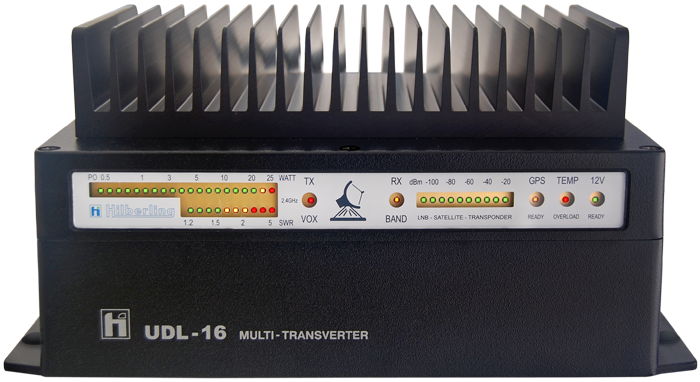
UDL-16 Multi-Transverter
Up / Downlink Transverter for Satellite Communication on QO-100 / P4-A NB Transponder
Image courtesy of Hilberling GmbH.
That… is one sophisticated piece of Amateur Radio technology! As is the other products on that page of Amateur Radio products by Hilberling.
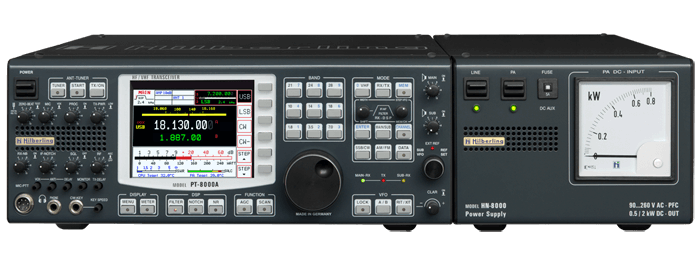
This is an example of Zero Retries Interesting products that aren’t widely known outside of Europe. The PT-8000A - VLF / HF / VHF Ham Radio Transceiver is pretty impressive also.
Image courtesy of Hilberling GmbH.
I really like the front panel layout / user interface of the PT-8000A. It seems very functional and straightforward with a minimum of distracting, over-complicated “eye candy” that’s so prevalent on Amateur Radio HF radios in this era.
Hilberling also offers a 2.4 GHz transverter for uplinking to the QO-100 Amateur Radio payload in Geosynchronous Earth Orbit (GEO) above the Eastern Hemisphere which has driven a lot of technological innovation about Amateur Radio satellite communications in Europe and Asia.
It’s really cool to see a really solid acknowledgment from Hilberling about the value of providing unique, technologically innovative products into the Amateur Radio market, and especially the acknowledgement that participating in Amateur Radio is a core value of the company.
My thanks to Steve Monsey N0FPF for bringing this development to my attention for inclusion in Zero Retries.
Given that I had planned for this week to be an “off week” for publishing Zero Retries, this issue almost became the first Zero Retries Bulletin. However, the three significant stories combined were enough justification to make this issue into a full issue of Zero Retries.
Zero Retries Bulletins will (generally) be a brief post / email on a single subject, published whenever there’s a story that’s more appropriate to publish sooner than the weekly (or biweekly) cadence of Zero Retries. My model for Zero Retries Bulletins is the relationship between Amateur Radio Weekly and Amateur Radio Daily, with the latter being a single subject, published whenever appropriate.
Substack Sponsorships
Email from Substack:
You’re invited: early access to sponsorships on Substack
We recently announced Creator Kits for Substack bestsellers. These are a way to let us know you’re interested in using sponsorships and brand partnerships to add value for your subscribers.
The idea is simple: brands can support your work directly in ways your subscribers benefit from, like unlocking a paywalled post, co-hosting an event, or backing a series you care about.
If you’d like to participate, publish your Creator Kit: a media kit that helps us introduce your publication to potential brand partners.
Participation is entirely optional. Turning on your Creator Kit simply lets us know you’re interested. You’ll always choose whether to work with a brand, set the terms, and keep the vast majority of the revenue. We’ll handle the rest.
I was apparently an early invitee because Zero Retries has more than 100 paid subscribers. Substack isn’t very specific about exactly how Substack sponsorships work, other than how to create the “Creator Kit”. But, presumably, there will be some form of sponsorship message… ads… inserted into Zero Retries. It’s unlikely that there are any Zero Retries Interesting Amateur Radio advertisers on Substack, so likely the ads, er, sponsorship messages will be directly relevant.
This is an intriguing possibility, given that there has been zero, zip, nada interest from Amateur Radio sponsors, other than the wonderful Paid Subscribers and Founding Members, to help financially support Zero Retries. Thus this might be worth a try.
One feature that I hope will be available (and if it isn’t, I’ll request that it be added) is an option that Paid Subscribers and Founding Members not be shown sponsorship messages (ads).
EtherHam is Random Wire’s “sister” publication, where KJ7T publishes longer-form, less topical articles. Of particular interest to me on EtherHam was today’s article Build Your Own Substack Archive Search. KJ7T is absolutely correct that Substack’s search capability, especially as your archive grows (such as more than 250 issues of Zero Retries) can only (charitably) be described as “poor”. I tried using Google’s NotebookLM as an archive query tool, but I’ve not been impressed with it, especially the minutes-long lag in just doing a simple query. I’m going to have to carefully consider whether KJ7T’s “simple” solution:
… standard shared hosting with PHP and SQLite — no special server setup required.
is within my capabilities to create and maintain. But, I really do need a search capability for Zero Retries that works!
Technological Innovation in Radio Technology in World War 2
The algorithm (or full blown AI now, I guess) on YouTube has begun presenting me with World War 2 “mini documentaries”. In reality, these are essentially AI generated podcasts with random… at times laughable… slideshows of photos to qualify as a “video”. Because of the droning AI voices don’t vary much in intonation, I’ve found that they’re relaxing audio as I’m trying to go to sleep. Some are really bad. Some are… not terrible. A handful have been reasonably good and informative about things I never knew.
A subset of these World War 2 videos discuss radio technology that was developed or perfected during World War 2. I’m now beginning to look around for books that better explain this incredible period of innovation in radio technology.
The biggest revelation, to me, about radio technology developed during World War 2 was how a Proximity Fuze artillery shell works - and was developed with early 1940s electronics technology. Would you imagine that a vacuum tube could be developed that could withstand the incredible acceleration and centrifugal force within an artillery shell? Also remarkable was that the US development of a workable Proximity Fuze was a technology development program second only to the Manhattan Project in secrecy, complexity, and overall cost. Another groundbreaking aspect of the Proximity Fuze program was that the requirements for quality control and reliability of electronic components was exponentially higher for use in Proximity Fuzes. That industry experience became a significant advantage in developing reliable electronics for the space use.
Those two aspects boggled my mind. Things you have no idea about…
The Proximity Fuze development program helped fill in a gap in my knowledge base of electronics history, that (glass) vacuum tube circuitry was gradually displaced by more reliable, more capable, and (finally…) cheaper transistors. But in that transition, there was an odd almost-hybrid of the two - the Nuvistor, which at a glance could easily be confused as a transistor, but was actually a miniaturized vacuum tube in a metal can, like early transistors. Where did the Nuvistor come from? It was barely mentioned in all the voracious reading I did as a teenager about electronics. But after learning about the development of the Proximity Fuze, and the need for highly ruggedized, highly miniaturized, highly reliable vacuum tubes, Aha! Now I understand the Nuvistor a lot better.
Very slightly related to Amateur Radio - the Doppler RADAR function of the US Proximity Fuze developed during World War 2 operated at 180 – 220 MHz. (In North America, the 220-225 MHz band was allocated to Amateur Radio. Later, 220-222 MHz was allocated to other services.)
Some other radio-related technologies developed / perfected in World War 2 (most by the Allies):
FM modulation and VHF / UHF became much more widely used for tactical communications, especially in tanks, jeeps, and “man portable”:
The SCR-536 handheld “Walkie Talkie” was so revolutionary that (per the videos), the first few units found by the Germans were considered a propaganda tool, in part because it used FM, which was not used by the Germans.
The SCR-300 backpack FM radio was revolutionary - radios (in sufficient quantity) with reasonable range and reliability could be placed wherever needed, included forward observers spotting for infantry.
Crystals began being widely used making radio much more reliable,
Radio Teletype (RTTY) became widely used,
LORAN was developed for aviation and marine navigation,
Germany developed Knickebein (”Crooked Leg”), X-Gerät (”X-Apparatus”), and
Y-Gerät (”Y-Apparatus”) to navigate their bombers over the UK.
Direction Finding systems became much more widely used for rapid location of transmitters,
RADAR of course, especially the UK’s Chain Home network and microwave RADAR that was used to locate surfaced submarines,
Single Sideband (SSB) came into widespread use because HF frequencies became very heavily used and SSB was more efficient than AM,
Mobile communications (including backpack radios) became much more widely used, driving the development of more rugged electronics and better power efficiency,
And, all of this radio / RADAR technology created Electronic Warfare, from simple strips of aluminum foil “chaff” to jam RADAR, to active electronic jamming of RADAR, radio communications, land radio location.
One video mentioned that the three highest priority consumables for logistics support to the front line were:
Artillery shells and ammunition,
Vehicle fuel,
Batteries for the portable radios.
Feather Ruffling
This week a Zero Retries reader pointed out to me that in my call ‘em as I see ‘em candid style of discussing Amateur Radio organizations, projects, and (rarely) individuals, I don't exactly endear myself to those organizations, projects and individuals.
That’s a fair point, and quite possibly why none of the four organizations have responded substantively to my suggestion to jointly promote FreeDV RADE.
The freedom to be able to do so - offer such suggestions, candidly, in detail, is one of the benefits, and perhaps responsibilities, of being a fully independent publication. I understand why other publications / media choose a different path - never saying anything that potentially might offend organizations or individuals.
But in the big picture of Amateur Radio in the 2020s, a “never potentially offend” perspective isn’t what’s needed for Amateur Radio to continue for the long term. Especially in this era where Amateur Radio is transitioning not only in technology, but there is a substantive change in orientation of Amateur Radio Operators - from “traditional” Amateur Radio Operators to the NewTechHams. Not to mention Amateur Radio’s tenuous perception of being relevant to society in the 21st Century. I’m fond of offering this quote:
Ultimately, amateur radio must prove that it is useful for society. Dr. Karl Meinzer DJ4ZC.
Here in Zero Retries, I’m an unabashed advocate of NewTechHams. There’s no one… no organization, that is willing to speak “truth to power” about the growing population and influence and eventual dominance of NewTechHams within Amateur Radio. I really, really wish there were. So, I try to do so… despite the ruffled feathers that result. I hope that those whose feathers are ruffled will try to understand the bigger picture.
Meadow Day Experiment 2 - With Starlink Mini
It’s probable that next weekend I’ll attempt a Meadow Day Experiment 2, this year with a more realistic scenario of using my Starlink Mini, battery powered, of course, and connected to my now-ancient 100 watt cheap solar panel.
Barring unforeseen events, this weekend just might be the first time in more than a month that there’s uncontested time in N8GNJ / Zero Retries Labs. A pickup / reorganization / project time in the Labs is long overdue. My brother just sent me a wonderful surprise present of my Dad’s old wooden tool chest. That tool chest evokes wonderful fond memories in childhood and my early teen years learning how to use tools and build small projects at Dad’s workbench in our garage during the summer. Dad’s tool chest deserves a prominent place of honor near the N8GNJ Labs workbench.
Have a great weekend, all of you co-conspirators in Zero Retries Interesting Amateur Radio activities!
My ongoing Thanks to: Tina Stroh KD7WSF for, well, everything! Jack Stroh, Late Night Assistant Editor Emeritus Fiona and Shreky Stroh, Late Night Assistant Editors In Training
Founding Members who generously support Zero Retries financially: Founding Member 0000 - Steven Davidson K3FZT (Renewed 2025, 3rd year!) Founding Member 0001 - Randy Smith WU2S (Renewed 2025, 3rd year!) Founding Member 0002 - Chris Osburn KD7DVD (Renewed 2025, 3rd year!) Founding Member 0003 - Don Rotolo N2IRZ (Renewed 2025, 3rd year!) Founding Member 0004 - William Arcand W1WRA (Renewed 2025, 3rd year!) Founding Member 0005 - Ben Kuhn KU0HN (Renewed 2025, 3rd year!) Founding Member 0006 - Todd Willey KQ4FID (Renewed 2025, 3rd year!) Founding Member 0007 and 0010 - Merik Karman VK1DF / VK2MKZ (Renewed 2025 x2, 3rd year!) Founding Member 0008 - Prefers to Remain Anonymous 08 (Renewed 2025, 3rd year!) Founding Member 0009 - Prefers to Remain Anonymous 19 (Renewed 2025, 2nd year!) Founding Member 0011 - Rick Prelinger W6XBE (Renewed 2025, 2nd year!) Founding Member 0012 - Ryan Tolboom N2BP (Renewed 2025, 2nd year!) Founding Member 0013 - Newton White N4EWT (Renewed 2026, 2nd year!) Founding Member 0014 - Joe Hamelin W7COM (Renewed 2026, 2nd year!) Founding Member 0015 - Rich Stocking N7OP (Renewed 2026, 2nd year!) Founding Member 0016 - Prefers to Remain Anonymous 77 (New 2025) Founding Member 0017 - Phil Karn KA9Q (New 2025) Founding Member 0018 - Prefers to Remain Anonymous 95 (New 2025) Founding Member 0019 - Prefers to Remain Anonymous 0108 (New 2025) Founding Member 0020 - Prefers to Remain Anonymous 110 (New 2025) Founding Member 0021 - Prefers to Remain Anonymous 111 (New 2025) Founding Member 0022 - Prefers to Remain Anonymous 112 (New 2025) Founding Member 0023 - Prefers to Remain Anonymous 116 (New 2026) Founding Member 0024 - Rob Bowser (SPOOLTENNA) (New 2026) Founding Member 0025 - Dave Stewart K7XST (New 2026)
Numerous Annual and Monthly subscribers who also generously support Zero Retries financially!
You thousands of readers of Zero Retries without which there would be little point in publishing this newsletter.
Fair Use - All excerpts from other authors or organizations, including images, are intended to be fair use and are fully attributed generally by author and link (URL).
Paid Promotional Content - Unless otherwise noted in the article or item, advertisement, or sponsorship notice, Zero Retries does not include paid promotional content. Exceptions:
Advertisements in Zero Retries,
Sponsorships in Zero Retries,
Zero Retries products,
Zero Retries events
Features and content exclusive to paid subscribers.
If GNU Radio experimenters aren’t Amateur Radio Operators, they’ll likely get licensed to be able to use the LinHT in its full capabilities on the Amateur Radio 70 cm (420-450 MHz [in the US]) band.
Based on its years-long development, and steadily improving capabilities, Mercury was not reverse engineered from VARA. Mercury was an independent development of an HF data communications modem. Mercury (independently) implemented some of the capabilities of VARA HF such as use of Forward Error Correction (FEC), Orthogonal Frequency Division Multiplexing (OFDM) (the OFDM modem implemented by FreeDV was used) and “upshifting” and “downshifting” the combination of speed, modulation, etc. as HF band conditions change to provide a data communications connection.